

Menu
RU EN AR
Why the Classroom Still Remains a Black Box—and How AI Makes Learning Observable

Why the Classroom Still Remains a Black Box—and How AI Makes Learning Observable

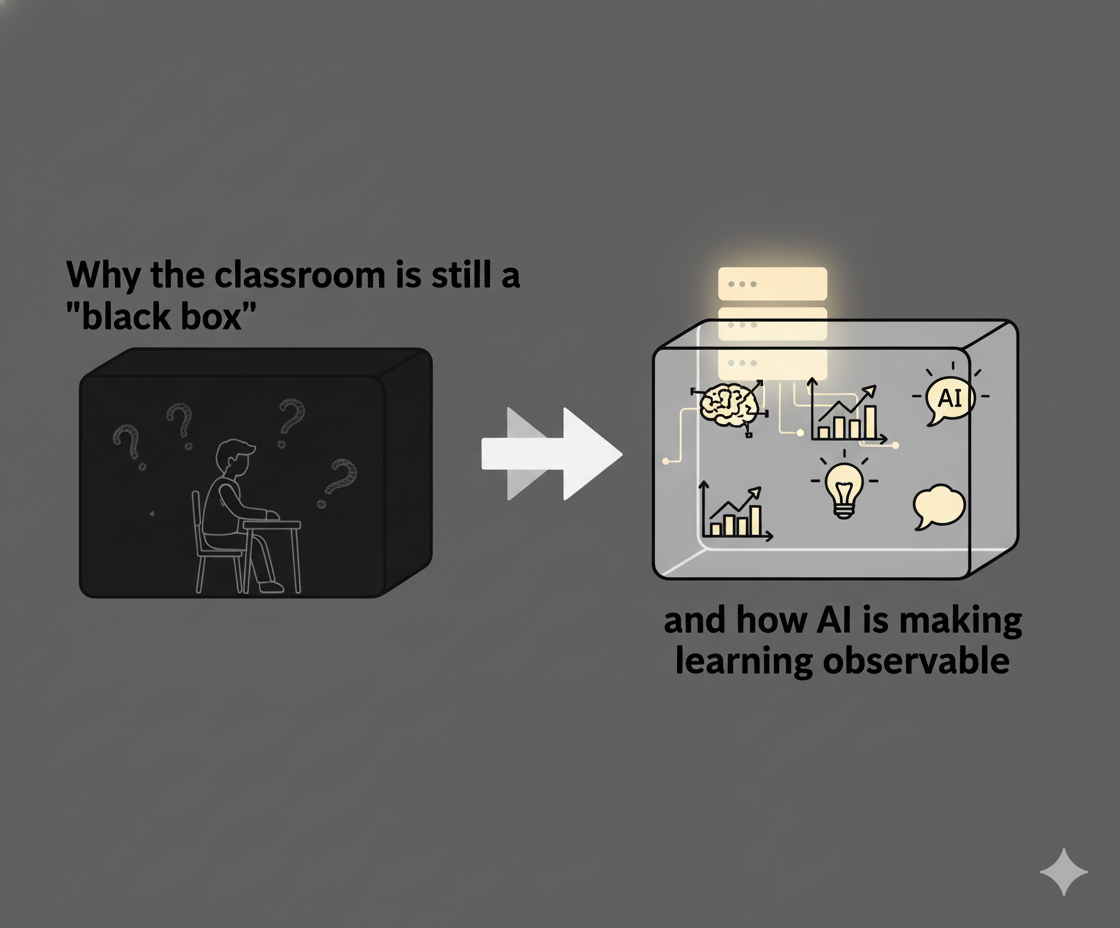
Schools see grades, reports, and discipline, but they have little insight into the learning process itself. In this article, we explore why the classroom has long remained a "black box" and how AI is helping make the educational environment observable—without invading privacy or monitoring the content of conversations.

The classroom is where the future is shaped. Yet the logic of this process remains largely invisible

We can see learning outcomes: grades, behavior, attendance, exam results. But we barely see the mechanisms that create these outcomes every day inside the classroom. This is exactly what Hivelab defines as the “black box” problem in education.

For decades, school education has been built around familiar metrics: academic performance, discipline, curriculum completion, and test results. These indicators are useful, but they have a fundamental limitation: they describe outcomes, not the process itself.
Between a teacher explaining a topic and a student receiving a final grade lies a complex chain of events. It includes attention, engagement, clarity of explanation, emotional climate, psychological safety, dialogue structure, participation of quieter students, response to mistakes, and the teacher’s ability to hold the group’s focus. This is where real learning actually happens.
The problem is that this layer has traditionally been barely measured. The classroom remained a space where everyone understood that something important was happening, yet almost no one could describe it precisely, systematically, and over time. Hivelab states this directly: we see the outcomes, but not the mechanisms that create them. Today, however, modern AI approaches make it possible to observe the internal processes of learning without intrusion and without compromising privacy.
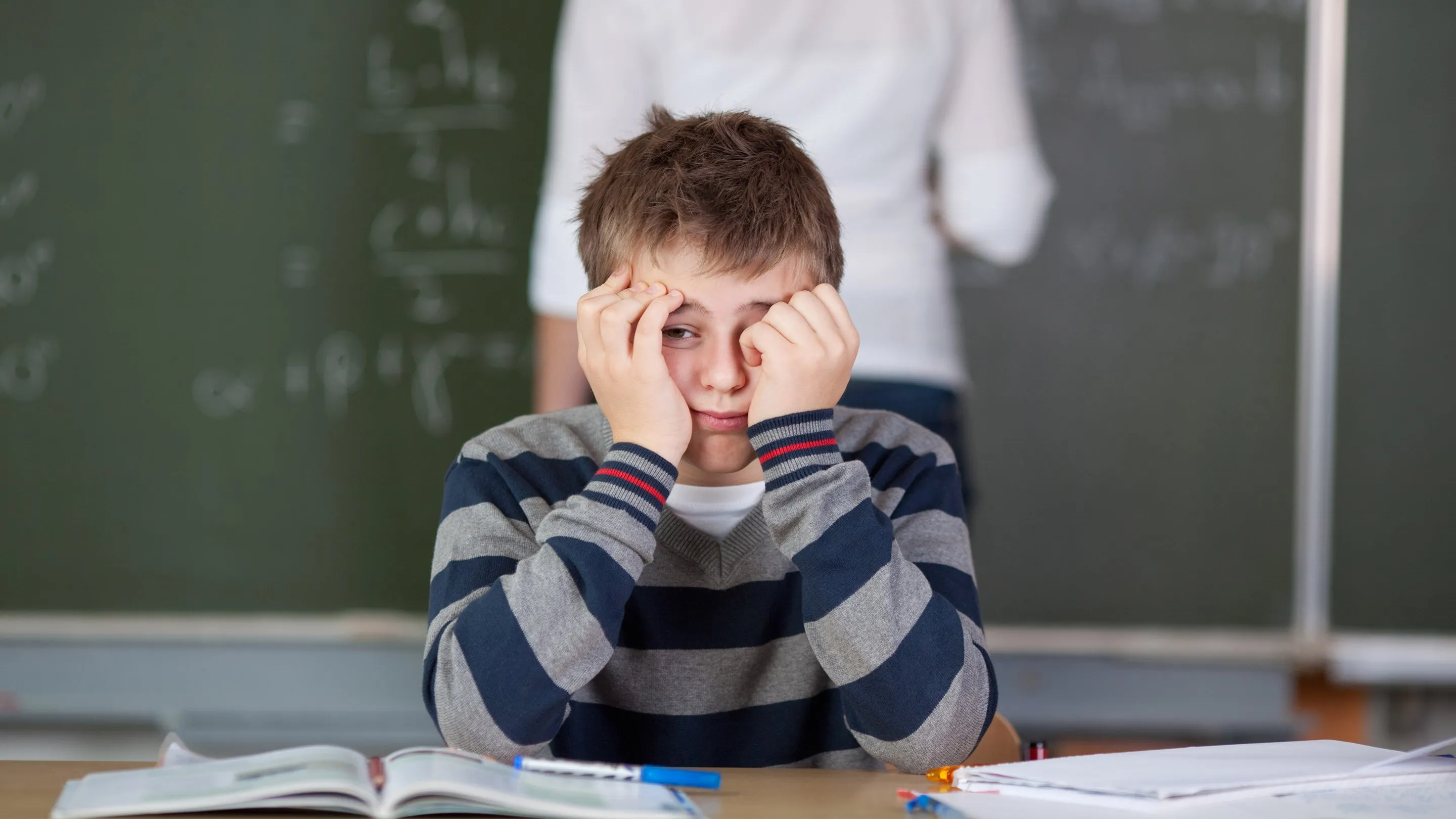
“We see the outcomes, but not the mechanisms that create them.”

This idea may sound simple, but it is exactly what separates the old logic of education management from the new one.

When a school cannot see the learning process from the inside, it is forced to rely on indirect signals. If a student is struggling, we usually learn about it only after performance drops. If emotional tension, isolation, or social exclusion appears in the classroom, it is often noticed too late. And if a strong teacher consistently creates an engaging environment, this often remains a matter of reputation and personal impression rather than a transferable model of quality.

As a result, management decisions are frequently delayed. Methodological support is delivered “on average across the system” rather than based on real points of growth. Parents receive the final picture, but do not truly understand how a child lives inside the educational environment. A school may look organized from the outside while remaining opaque on the inside.

What does it mean to make learning observable?

Making learning observable does not mean turning school into a space of total surveillance.

It means learning to see the structure of educational interaction: who is included in communication, who consistently remains silent, how attention is distributed, how clear speech is, whether signs of tension are present, how dense meaningful interaction is, and whether dialogue supports thinking rather than merely discipline.

Hivelab’s approach is based on a simple analogy: you can measure the temperature inside a pipe without knowing exactly what is flowing through it. 

The same applies in the classroom: AI can analyze communication parameters — who spoke, to whom, for how long, with what emotional intensity, with what clarity, with how many overlaps, pauses, and reactions — without accessing the semantic meaning of what was said.

What can already be measured today

What matters is that the object of observation here is not the child’s private life, but the structure of the educational environment.

dialogue duration;
number of turns and sentences;
speech clarity;
emotional intensity;
signs of irritation or frustration;
frequency of interruptions and overlapping speech;
response speed;
degree of participation in conversation;
balance between directiveness and openness;
depth and meaningfulness of interaction;
breadth of definitions and novelty of formulations;
characteristics of the classroom’s social graph.

Old logic

Schools mostly measure outcomes: grades, reports, exams, and discipline.

New logic

Schools begin to see the process itself: quality of interaction, emotional climate, attention distribution, and involvement in dialogue.

The key shift

From evaluating consequences to understanding causes.


What is especially important is that this approach makes visible not only the academic but also the human dimensions of school. A classroom can be viewed as a microsociety — a living social organism represented as a graph with nodes, connections, intensity, reciprocity, and bridges between groups.

Within this model, informal group leaders, isolated students, overloaded communication hubs, weak ties, and hidden social gaps become visible. This fundamentally changes the philosophy of educational management. Instead of reacting only after a problem has already occurred, schools can begin to detect early warning signals: declining engagement, a child dropping out of communication, deterioration in emotional climate, or rising tension in teacher-student interaction.

Here, AI works as a second layer of attention, not as a digital overseer.

Observability is not surveillance. It is the ability to understand the environment before a problem turns into a crisis.

Article photo


This distinction is fundamental. At the core of Hivelab’s approach is an ethical position: data should illuminate, not dominate; AI is a tool for understanding, not control. Technology does not replace pedagogical judgment — it expands it. It does not substitute the teacher — it helps the teacher see what is too difficult for one human being to hold in the flow of a live lesson.

In ordinary practice, even a strong teacher cannot simultaneously explain the material, sense group dynamics, track the participation of quieter students, notice hidden tension, remember the dialogue structure, and objectively record changes from one lesson to the next. This is not a question of professionalism. It is a question of the limits of human attention.

AI is therefore not a replacement for the human being, but a way to increase the resolution of pedagogical observation.

Why does this matter now?

Education has reached a point where the demands placed on schools are growing faster than the tools available to understand them. Schools are expected to deliver results, inclusion, emotional safety, soft skills, career orientation, adaptability, digital maturity, and preparation for an AI-shaped world — all at once. But this complexity can no longer be managed through final grades alone.

For the system to become stronger, it needs more than new courses and platforms. It needs a new kind of observability. It needs the ability to see the quality of the educational environment with the same seriousness that business sees production processes, medicine sees the condition of a patient, and engineering sees the state of complex infrastructure.

That is why Hivelab speaks about the future of education as a transition toward an observable educational system — one in which the social, cognitive, and instructional dimensions of learning become measurable and understandable.

What schools gain when the classroom stops being a “black box”


earlier detection of problems instead of reacting after the fact;
more precise support for teachers;
better understanding of classroom emotional climate;
a more objective view of student engagement;
the ability to distinguish noise from systemic patterns;
increased trust from parents;
a foundation for development, not only control.

Can this be described almost mathematically?

Yes — and this is where the article becomes not only conceptual, but also research-oriented.

If we represent the classroom as a graph G=(V,E)G=(V,E), where:

  • VV represents participants in the educational environment: teacher, students, assistants;
  • EE represents interactions between them;
  • the weight of each edge wijwij​ represents the intensity, frequency, or quality of interaction between participants iiand jj,

then the classroom can be analyzed as a living network.

“We can manage not only what has already happened, but also what becomes visible early enough.”


In Hivelab’s framework, this idea continues through a system of indices: Emotional Climate Index, Communication Quality Index, Teaching Quality Index, and Knowledge Coverage Index. Together, these make it possible to move from scattered impressions to a coherent model of the educational environment, where emotional climate, interaction quality, teaching style, and the completeness of knowledge transfer no longer remain abstractions.

This approach is especially valuable because it creates a foundation for development rather than punishment. Once the classroom becomes visible, the goal is no longer to search for someone to blame, but to design improvements: change feedback methods, strengthen engagement, support quieter students, and develop teachers in a targeted rather than uniform way.

As long as the classroom remains a “black box,” schools can only manage the surface. Once the environment becomes observable, there is a real opportunity to work with the true causes of learning quality.

The future of education does not begin with a new platform, but with a new ability to see.


The central question for the coming years in education is no longer, “Can AI be used in schools?” A far more important question is: what kind of AI does a school actually need in order to become smarter, more humane, and more accurate in understanding both the child and the teacher?

Hivelab offers one of the most mature answers to that question. Not generation for the sake of generation. Not control for the sake of control. But observability for the sake of understanding.

And this may be one of the most important shifts in modern educational thinking: the school of the future is not merely a place where knowledge is delivered, but an environment that we are finally beginning to see for what it truly is.

Language
RU EN AR

Write to us

Fill out the form and we'll get back to you

Let's meet for coffee

Leave your name and phone number — we'll get in touch